About FAWOVC

About FAWOVC

 
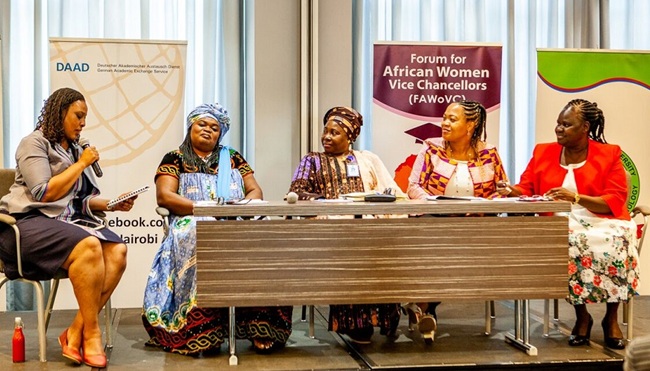
The Forum for Women Vice Chancellors in Africa (FAWoVC) is a pan-African leadership network bringing together current and former female Vice Chancellors, Rectors, and Presidents across the continent.
 
Founded on August 24, 2016, in Nairobi, Kenya, under the theme "Higher Education for Economic Empowerment," FAWoVC was established by eleven pioneering leaders led by Professor Mabel Imbuga.
 
Today, FAWoVC has grown into a network of over 75 members across 34 African nations, advancing women's leadership, institutional excellence, and transformative change in higher education.

Our Continental Reach

FAWoVC brings together women academic leaders from across Africa, creating a powerful network that connects diverse regions and institutions.

Our members represent Eastern, Western, Southern, Central, and Northern Africa, united by a shared commitment to advancing women’s leadership and transforming higher education across the continent.

The Challenge: Closing the Leadership Gap

Despite women often outnumbering men in university enrollment, a stark "glass ceiling" remains at the highest levels of academia:
   •  Global Disparity: Women hold less than 30% of top academic leadership positions worldwide.
   •  Regional Urgency: In Sub-Saharan Africa, women represent 43% of tertiary students but fill only 2.5% to 2.9% of Vice Chancellor roles.
   •  STEM Underrepresentation: Leadership skews heavily male in Science, Technology, Engineering, and Mathematics fields critical to the continent’s future

Our Mission and Impact

FAWoVC serves as a dedicated platform to deliberate on leadership roles and catalyze institutional transformation. We align our efforts with the African Union Agenda 2063 and the Sustainable Development Goals (SDGs), recognizing that gender equality is not just a right, but a requirement for Africa’s development.

Our Vision for the Future

We are changing the dynamics of African academia. By spearheading gender-responsive initiatives, FAWoVC is ensuring that more women not only enter the workforce but ascend to the highest echelons of research, academia, and institutional leadership. Together, we are building a legacy of leadership that reflects the true potential of the African continent.